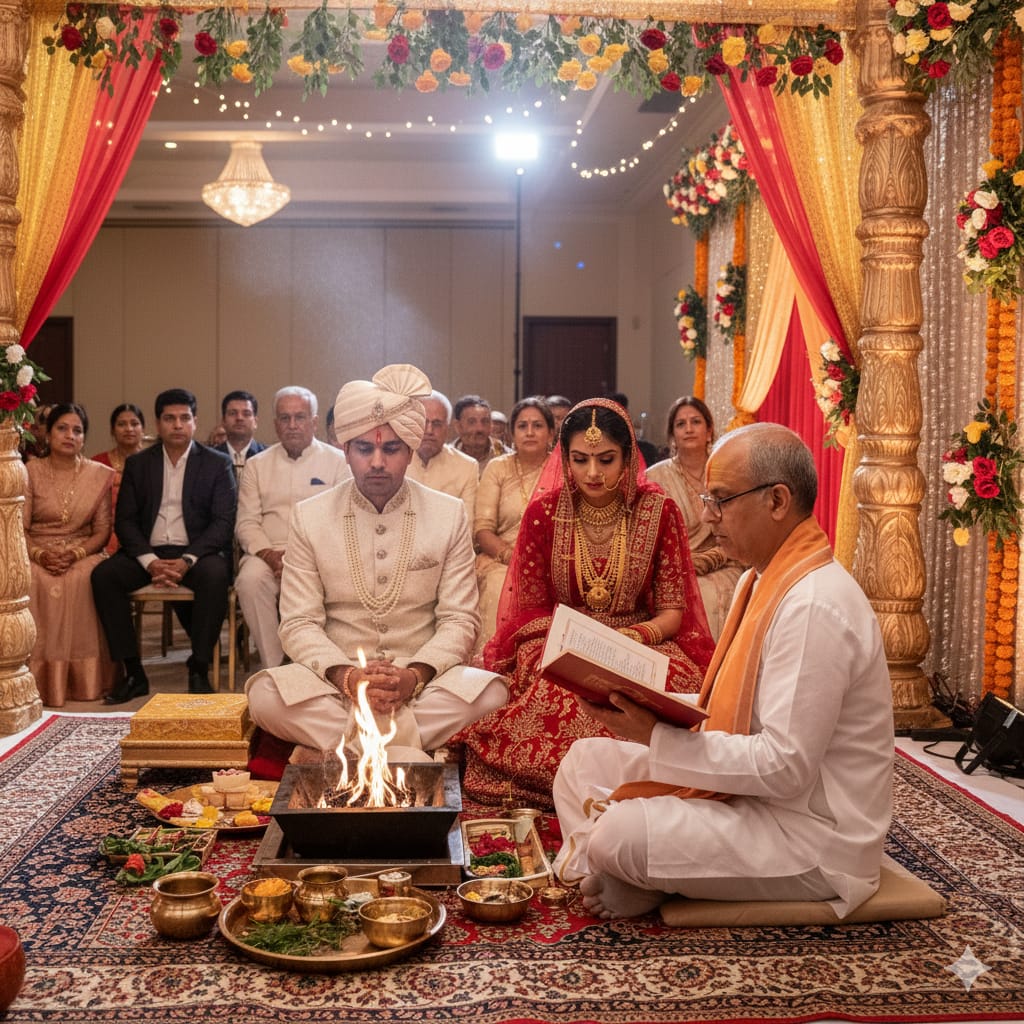
The Vedic Marriage: Exploring the Arya Samaj Philosophical Foundation
Interpreting the 'Shakat' (Chariot) Concept: Carrying the Responsibilities of Marriage
The etymological roots of Vi-vah—comprising 'Vi' (distinctive) and 'vah' (conveyance)—characterize marriage as a divine vessel engineered to navigate two souls through the complexities of existence. It transcends the notion of a simple social contract, evolving into a profound alliance centered on mutual sovereignty and collective wellness. This foundational strength is what grants the union its "indestructible" quality, allowing it to remain spiritually fortified against the trials of the material world.
Vedic wisdom personifies this relationship through the allegory of the Shakat (chariot), where the spouses serve as two perfectly calibrated wheels. For this metaphorical vehicle to progress seamlessly, it must maintain a Divine Equilibrium composed of Samya (parity), Sangati (synergetic harmony), and Sadgati (ethical advancement). This ensures a synchronized trajectory, where the couple’s unified momentum is channeled toward spiritual fulfillment and temporal prosperity.
At its core, Vivah facilitates the absolute integration of three distinct planes: Atma (soul), Hriday (emotional center), and Sharir (physical form). This meta-physical fusion produces a singular, cohesive entity that operates beyond the constraints of conventional legalities or fleeting emotions. By consolidating these vital energies, the couple aligns their spiritual frequencies, cultivating a transcendental bond that is viewed as perpetual and timeless.
The ethical cornerstone of Vivah is captured in the phrase "Vishesh Roop Se Vahan Karna," denoting the conscious assumption of profound socio-moral obligations. It is a transformative Kriya (sacred duty) necessitating deliberate Prayatna (endeavor) to successfully occupy the Grahastashram. Within this stage, the couple assumes the role of Socio-Moral Stewards, acting as the structural pillar of society through a committed life of self-discipline, shared sacrifice, and civic responsibility.