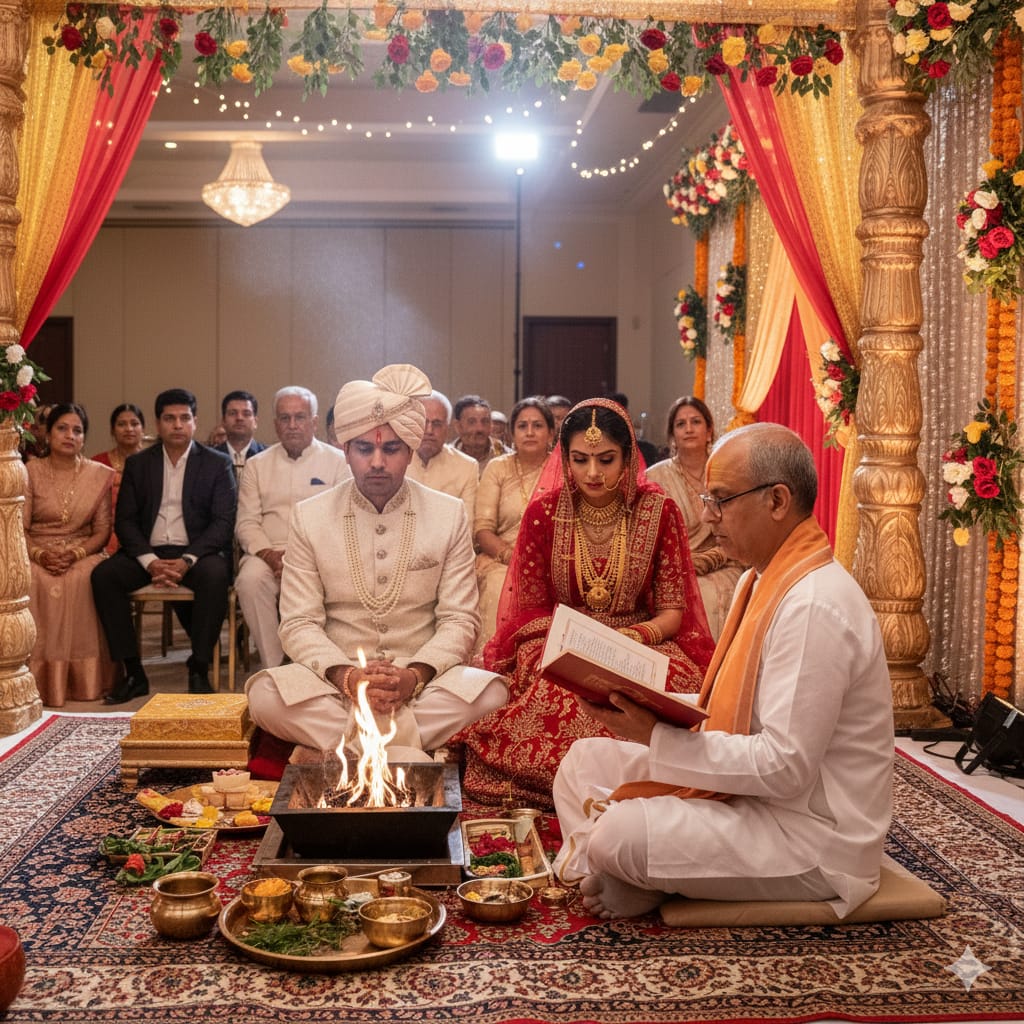
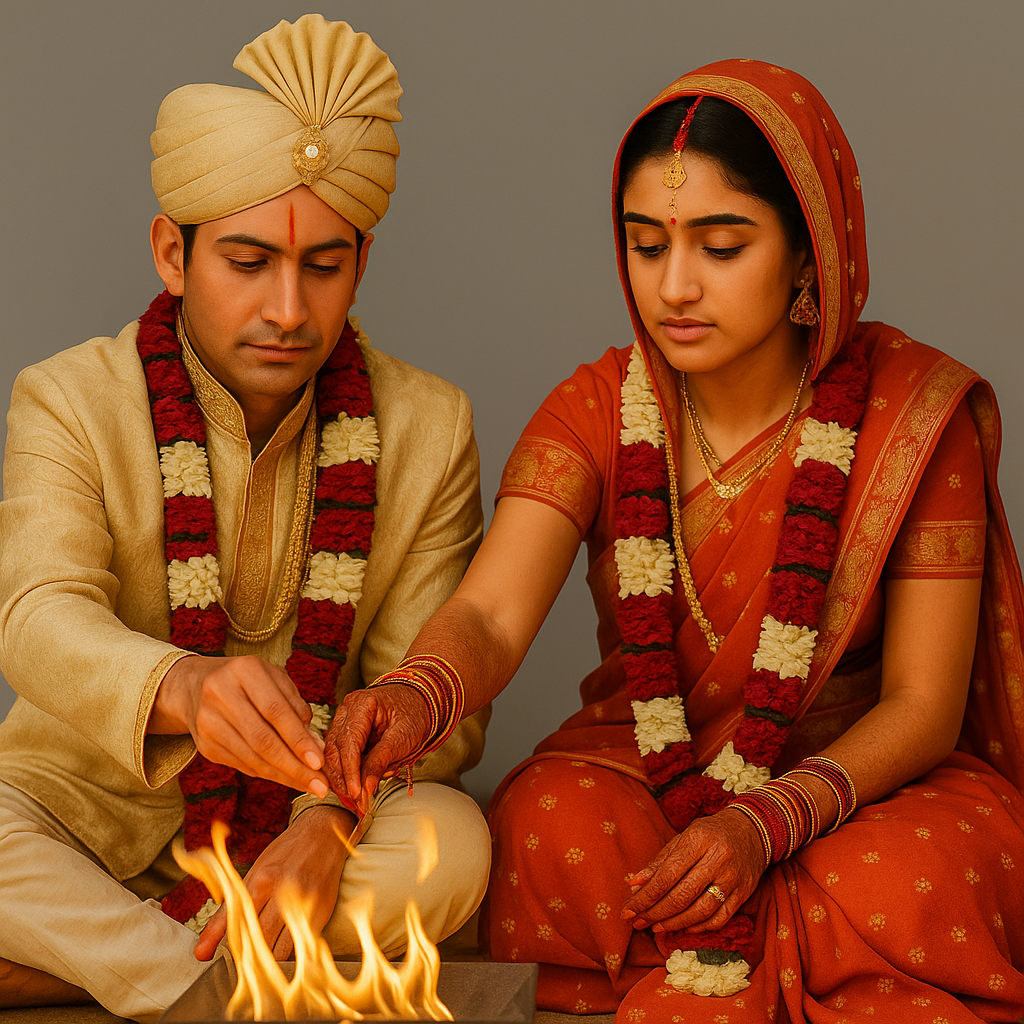
What is Arya Samaj Marriage? Exploring Vedic Roots in South Extension
Decoding 'Vi-vah': The Sacred Chariot of Grahastashram for a Harmonious Life
The Etymology of Vi-vah: The term Vi-vah is derived from 'Vi' (indicative) and 'vah' (vehicle), signifying that marriage is a sacred vessel intended to carry two individuals through the journey of life. It is a profound partnership where equality and mutual well-being are not just ideals, but essential requirements for the bond to remain unbreakable and spiritually significant.
The Symbolism of the Shakat (Chariot): Vedic Shastras visualize marriage as a Shakat or chariot, where the husband and wife function as two indispensable wheels. For this life-chariot to progress without faltering, there must be a perfect balance of Samya (equality), Sangati (harmony), and Sadgati (virtuous direction), ensuring that both partners move in unison toward a shared divine purpose.
The Union of Three Realms: In a deeper sense, Vivah is the ultimate surrender where two souls offer their Atma (soul), Hriday (heart), and Sharir (body) to one another. This holistic union transcends a mere legal contract, creating a singular entity where the physical, emotional, and spiritual energies of the couple are permanently intertwined.
Moral Duty of Grahastashram: The true essence of Vivah is 'Vishesh Roop Se Vahan Karna', which translates to the special undertaking of moral and social responsibilities. It is a dedicated Kriya (action) that requires conscious Prayatna (effort) to lead the couple into the Grahastashram, where they serve as the foundation of society through discipline and sacrifice.