The Spiritual Meaning Behind Namkaran Ceremony
Why the Naming Ritual is Considered a Sacred Life Milestone
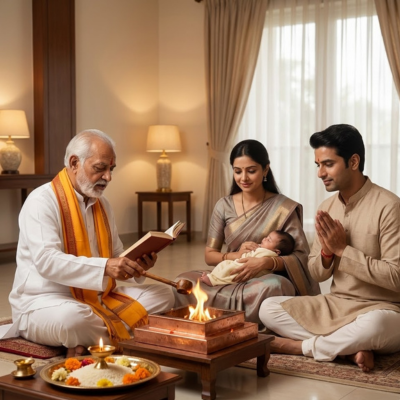
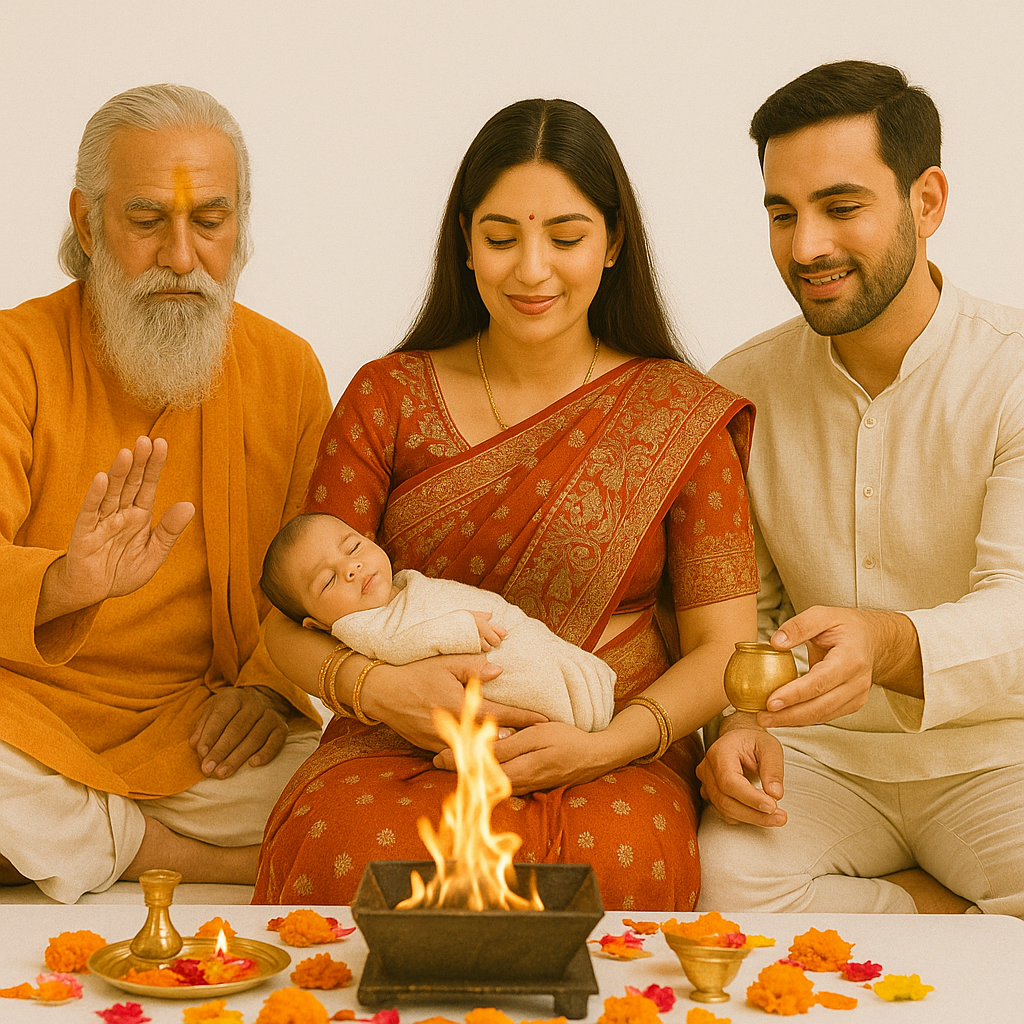
The arrival of a newborn transforms not only a household but also the spiritual rhythm of a family. In Hindu tradition, the formal acknowledgment of this new life takes place through Namkaran Sanskar, the sacred naming ceremony performed with Vedic mantras and Havan. Families residing in Golf Links often seek a qualified Pandit Ji who can conduct this ceremony with authenticity, clarity, and proper understanding of Vedic principles.
In Vedic thought, a name is not merely a social label. It represents identity, intention, and vibrational energy. The repeated pronunciation of a name throughout life is believed to influence consciousness and personal development. Because of this spiritual belief, the naming ritual is conducted in the presence of Agni, the sacred fire, which is considered a purifier and divine witness.
The ceremony follows the core principles of Arya Samaj, established by Swami Dayanand Saraswati. The Arya Samaj method emphasizes returning to the Vedas, maintaining simplicity, and avoiding ritualistic excess. The focus remains on mantra recitation, disciplined procedure, and spiritual understanding.
Traditionally, the ritual is performed within the first few weeks after birth, often around the 11th or 12th day. However, families may choose a suitable date based on health and convenience. The central purpose remains invoking blessings for the child’s wellbeing, moral strength, intelligence, and prosperous future.
This ceremony symbolically achieves several goals:
-
It introduces the child to family lineage and community
-
It sanctifies the chosen name through Vedic chanting
-
It purifies the home environment with sacred fire
-
It seeks divine protection and guidance for the newborn
-
It unites family members in collective blessing
Namkaran thus becomes not just a ritual, but the spiritual beginning of the child’s life journey.