Understanding Namkaran Sanskar and Its Spiritual Foundation
Sacred Beginning of a Child’s Identity in Vedic Tradition
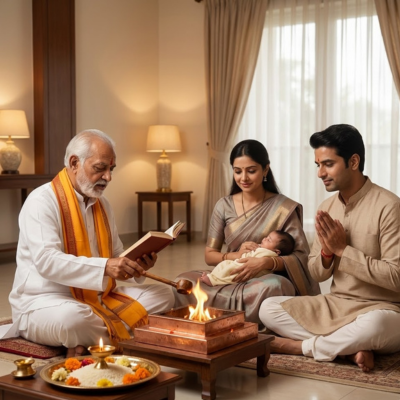
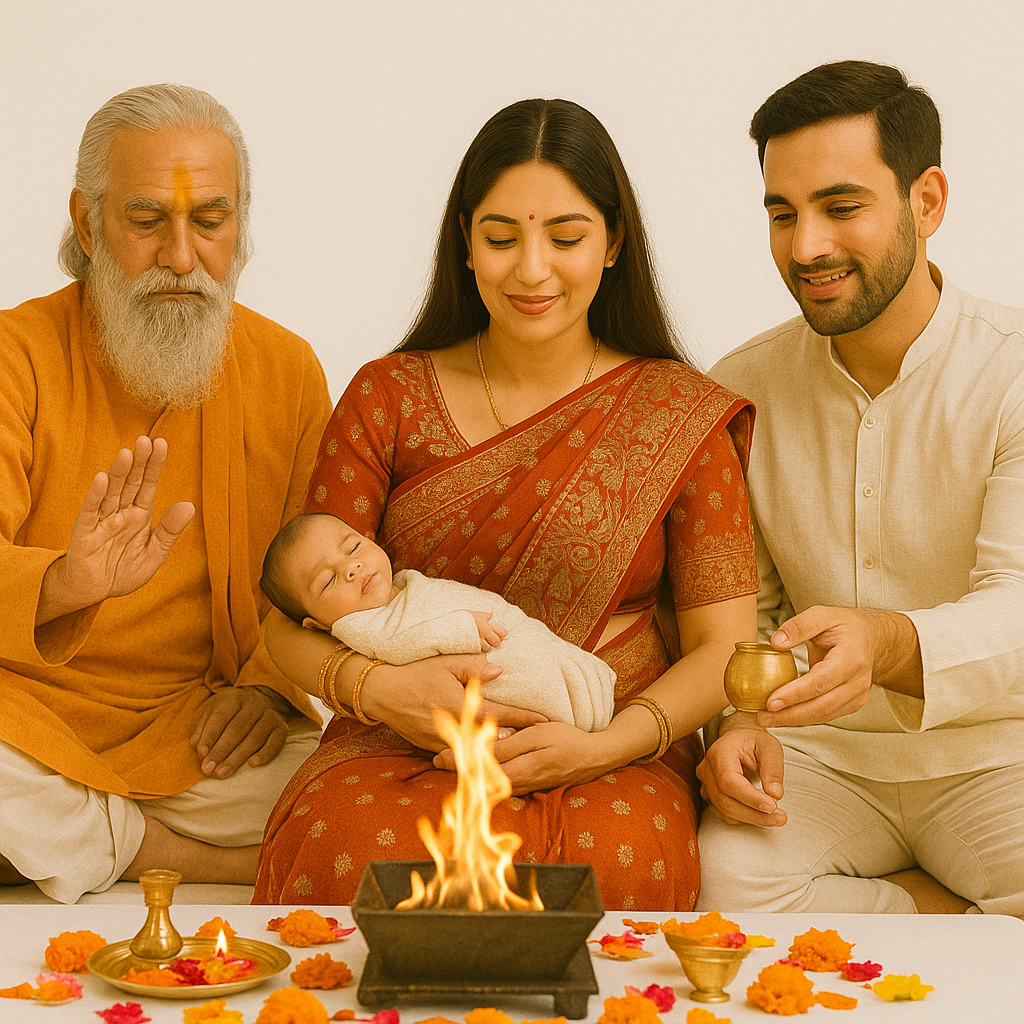
Welcoming a newborn into the family is a sacred and deeply emotional milestone. In Hindu tradition, this important occasion is spiritually formalized through Namkaran Sanskar — the Vedic naming ceremony performed with mantra chanting and sacred fire ritual. Families in Defence Colony who wish to conduct this ceremony properly often look for a knowledgeable and experienced Pandit Ji who understands authentic Vedic procedures and performs the ritual with discipline, purity, and spiritual focus.
Namkaran is not merely about selecting a modern or meaningful name. In Vedic philosophy, sound carries vibration, and vibration influences consciousness. The name given to a child becomes a lifelong identity and a repeated sound pattern that shapes personality, emotional connection, and social presence. Because of this belief, the ceremony is performed in the presence of sacred Agni (fire), which is considered a divine witness and purifier in Vedic tradition.
Following the principles of Arya Samaj, founded by Swami Dayanand Saraswati, the ritual emphasizes simplicity, clarity, and devotion without unnecessary ritual complexity. The focus remains on Vedic mantras, disciplined procedure, and spiritual understanding rather than elaborate ceremonial display.
It should be done on the 11th day or 101st day after excluding 10 days from the day of birth of the child and on the day of birth at the beginning of the second year.
Spiritually and culturally, this ceremony serves multiple important purposes:
-
It formally introduces the newborn into family lineage and society
-
It invokes blessings for long life, wisdom, and strength
-
It purifies the home environment through sacred Havan
-
It establishes a positive spiritual foundation for the child
-
It strengthens emotional bonding among family members
The gathering of elders and relatives during Namkaran creates a powerful collective blessing. The newborn is welcomed not only into the household but into a spiritual tradition that values discipline, morality, and devotion.