What is Mundan Sanskar and Why It Is Performed
Spiritual and Traditional Meaning of the Mundan Ceremony
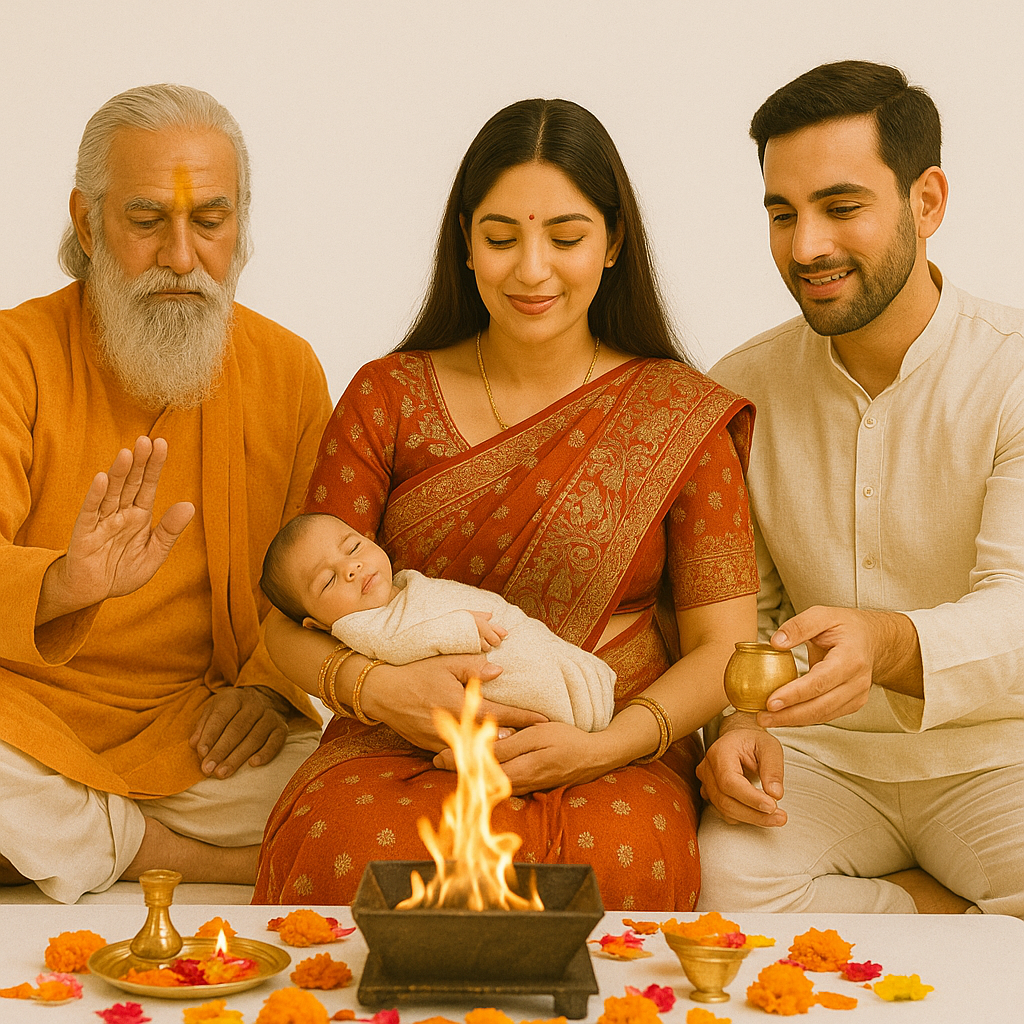
Mundan Sanskar is a traditional Vedic ceremony in which a child’s hair is removed for the first time as part of a sacred purification ritual. In many Hindu families, this ceremony is performed during early childhood and is accompanied by a Vedic havan puja where sacred mantras are recited to seek blessings for the child’s health, growth, and bright future.
When the ritual is performed by an Arya Samaj Pandit Ji for Mundan Havan Puja, the ceremony focuses on the teachings of the Vedas and emphasizes simplicity and clarity of rituals. The havan is conducted using a sacred fire while Vedic mantras are chanted and offerings are made into the havan kund. This creates a spiritually positive atmosphere and marks an important milestone in the child’s life.
In Arya Samaj traditions, the Mundan ceremony is performed in a meaningful and understandable way so that the family can actively participate in the ritual. The pandit explains the significance of the ceremony and guides the parents through each step of the process, making the entire event spiritually enriching rather than complicated.
Families arrange the Mundan Havan Puja with Arya Samaj Pandit Ji not only as a cultural tradition but also as a way to seek blessings for the child’s physical and mental well-being. The Vedic mantras recited during the havan are believed to bring positivity and protection for the child’s future.
Important elements included in the Mundan Havan ceremony are:
-
Sacred Vedic havan performed before the Mundan ritual
-
Chanting of traditional Vedic mantras
-
First ceremonial hair cutting of the child
-
Blessings from elders and family members
-
Offering havan samagri into the sacred fire
-
Prayers for the child’s health, wisdom, and prosperity